 By Emily Parker
Updated November 2026
Finding the best folding treadmill for runners means balancing two things that often pull in opposite directions: enough deck space and motor strength to run comfortably, and a frame that folds flat enough to fit in a closet, under a bed, or against a wall. This guide compares five models on the criteria that matter most for runners: belt length and width, motor horsepower, incline range, user weight capacity, and how easily the deck folds and locks. Each pick is judged on how well it fits those needs, using manufacturer specifications and the patterns owners commonly describe in feedback.
Our top picks at a glance
- 1
 TOP CHOICEBest overallTHERUN Incline Treadmill, Treadmills for Running and Walking, 400 lbsView on Amazon
- 2
 TOP CHOICEBest for heavier runnersWELLFIT 15% Auto Incline Treadmills for Home, 4.0HP Heavyduty TreadmilView on Amazon
- 3
 TOP CHOICEBest for small spacesAcezoe Folding Treadmill with 10% Incline, 2.5 HP Walking Pad with HanView on Amazon
- 4
 Best for steep trainingFoldable Walking Pad Treadmills with 15% Auto Incline, 3.0HP TreadmillView on Amazon
- 5
 Best for low step-up and joint comfortPro Runner X Treadmill – Heavy Duty Home Construction – FreeSync FTMSView on Amazon
Our Top Picks
Quick Comparison
| Product | Best for | Key feature |
|---|---|---|
| THERUN Incline Treadmill | Runners who want the most all-around capability | 0–16% auto incline with a wide belt and 400 lb rating |
| WELLFIT 15% Auto Incline Treadmill | Heavier runners and longer-stride users | 400 lb capacity with an 18 x 43-inch running belt |
| Acezoe Folding Treadmill with 10% Incline | Small rooms and shared living spaces | 2.5 HP motor with a handrail and 0.6–10 MPH range |
| Foldable Walking Pad Treadmill with 15% Auto Incline | Runners who want hill training indoors | 3.0 HP motor with 15 incline levels and 7.5 MPH top speed |
| Pro Runner X Treadmill | Runners sensitive to knee and hip impact | 6.5-inch step-up height and orthopedic belt |
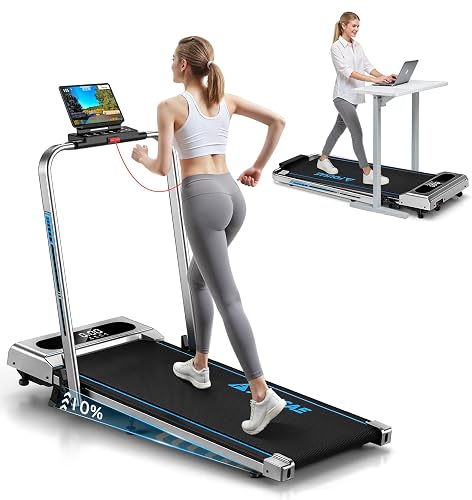
THERUN Incline Treadmill, Treadmills for Running and Walking, 400 lbs Weight Capacity Folding Treadmill with 0-16% Auto Incline, Wide Belt, 4.0 HP, App, Heart Rate
THERUN Incline Treadmill, Treadmills for Running and Walking, 400 lbs Weight Capacity Folding Treadmill with 0-16% Auto Incline, Wide Belt, 4.0 HP, App, Heart Rate
Best for: Runners who want the most all-around capability in a folding frame.
This model suits runners who train at varying speeds and grades and want one machine that handles easy recovery runs and hill sessions alike. The listing emphasizes a wide belt and a broad auto incline range, which makes it a good fit for people who expect to change pace often.
Key specs
- Motor: 4.0 HP (per listing)
- Incline: 0–16% automatic
- User weight capacity: 400 lbs
- Connectivity: app and heart rate features
Pros
- Wide incline range for hill and tempo work
- High weight rating gives a margin for heavier runners
- Heart rate and app features support structured training
Cons
- Larger footprint than compact walking pads
- Full-featured builds can take more effort to assemble and store
Bottom line: A strong first choice for runners who want incline variety and a sturdy platform without moving up to a commercial-grade machine.
WELLFIT 15% Auto Incline Treadmills for Home, 4.0HP Heavyduty Treadmill with 400LBS Capacity, Foldable Treadmill for Small Space, 18*43″ Large Running Belt, 1.0-8.7MPH, Pulse Sensor, 95% Pre-installed
WELLFIT 15% Auto Incline Treadmills for Home, 4.0HP Heavyduty Treadmill with 400LBS Capacity, Foldable Treadmill for Small Space, 18*43" Large Running Belt, 1.0-8.7MPH, Pulse Sensor, 95% Pre-installed
Best for: Heavier runners and longer-stride users who need belt room.
The 18 x 43-inch belt gives taller runners and those with a longer stride more room than many compact folding models. The 400-pound rating also makes it relevant for users who want a wider safety margin.
Key specs
- Motor: 4.0 HP (per listing)
- Incline: up to 15% automatic
- Belt: 18 x 43 inches
- Speed range: 1.0–8.7 MPH
- User weight capacity: 400 lbs
Pros
- Belt length suits longer strides
- High weight rating and 4.0 HP motor
- Pulse sensor for basic heart rate tracking
Cons
- Deck is heavier to fold and move than lighter walking pads
- Top speed of 8.7 MPH is below sprint-focused machines
Bottom line: Best for heavier or taller runners who want more belt space and a higher capacity rating without giving up folding storage.
Acezoe Folding Treadmill with 10% Incline, 2.5 HP Walking Pad with Handle Bar, 300 lb Capacity Treadmills for Home/Office, Foldable Treadmill with App & Speaker, 0.6-10 MPH
Acezoe Folding Treadmill with 10% Incline, 2.5 HP Walking Pad with Handle Bar, 300 lb Capacity Treadmills for Home/Office, Foldable Treadmill with App & Speaker, 0.6-10 MPH
Best for: Small rooms and shared living spaces.
Runners in apartments or home offices often need a machine that slides into a corner. This model’s handrail and compact frame suit people who prioritize storage and quiet, moderate-pace running.
Key specs
- Motor: 2.5 HP (per listing)
- Incline: 10%
- Speed range: 0.6–10 MPH
- User weight capacity: 300 lbs
Pros
- Handrail adds stability at higher speeds
- Speed range reaches 10 MPH for steady runs
- Compact footprint for tight spaces
Cons
- 300 lb capacity is lower than the top two picks
- 2.5 HP motor is best suited to moderate running rather than heavy daily volume
Bottom line: A practical pick for runners with limited space who run at moderate paces and do not need a high weight rating.
Foldable Walking Pad Treadmills with 15% Auto Incline, 3.0HP Treadmills for Home with APP, 12 HIIT, 7.5MPH 15-Level Incline Adjustment Electric Treadmill for Home with Heart Rate Monitoring, Speaker
Foldable Walking Pad Treadmills with 15% Auto Incline, 3.0HP Treadmills for Home with APP, 12 HIIT, 7.5MPH 15-Level Incline Adjustment Electric Treadmill for Home with Heart Rate Monitoring, Speaker
Best for: Runners who want hill training and interval sessions indoors.
The 15-level incline and preset HIIT programs point toward runners building endurance on grades. Its 7.5 MPH top speed is suited to tempo and steady-state work rather than fast sprint intervals.
Key specs
- Motor: 3.0 HP (per listing)
- Incline: 15 levels, auto
- Top speed: 7.5 MPH
- Programs: 12 HIIT modes (per listing)
Pros
- Fifteen incline levels for hill simulation
- Built-in HIIT programs reduce planning effort
- Heart rate monitoring supports zone training
Cons
- 7.5 MPH top speed limits fast interval work
- Program variety depends on app and console setup, so expect a learning curve
Bottom line: Good for runners focused on incline and structured intervals who run at moderate speeds.
Pro Runner X Treadmill – Heavy Duty Home Construction – FreeSync FTMS Bluetooth Connectivity – Low 6.5″ Step-up Height – Foldable Compact Storage – Orthopedic Belt – 350 lb Capacity
Pro Runner X Treadmill – Heavy Duty Home Construction – FreeSync FTMS Bluetooth Connectivity – Low 6.5" Step-up Height – Foldable Compact Storage – Orthopedic Belt – 350 lb Capacity
Best for: Runners sensitive to knee and hip impact.
A low step-up height and orthopedic belt target runners who want to ease into training or manage joint discomfort. The Bluetooth FTMS connection lets compatible training apps control the machine.
Key specs
- Step-up height: 6.5 inches (per listing)
- User weight capacity: 350 lbs
- Connectivity: Bluetooth FTMS
- Belt: orthopedic cushioning (per listing)
Pros
- Low deck height reduces step-up strain
- Bluetooth FTMS works with compatible training apps
- 350 lb rating covers most adult runners
Cons
- Not the best choice for high-speed sprint work
- Incline features are less emphasized than in the other picks
Bottom line: A comfort-focused option for runners who prioritize joint-friendly build over incline or top speed. Anyone with joint pain should check with a physician or physical therapist before starting a running program.
Buying Guide
Belt Length and Width
Runners typically need a belt long enough to accommodate their stride without landing near the front or rear rollers. Taller runners and anyone with a long stride should look for belts around 43 inches or longer. Width matters for comfort and for people who run with a wider arm swing. Check the listed dimensions before buying.
Good picks for this: WELLFIT 15% Auto Incline Treadmill, THERUN Incline Treadmill
Motor Horsepower
Horsepower is a useful indicator of how the motor handles sustained load, but it is not the whole story. Manufacturers often list peak or continuous ratings that vary in meaning. For running, a motor in the 2.5–4.0 HP range generally handles moderate running, while heavier or faster use benefits from the higher end.
Good picks for this: THERUN Incline Treadmill, Foldable Walking Pad Treadmills with 15% Auto Incline
Incline Range
Incline adds intensity without raising speed, which makes it valuable for hill training and for building endurance. Auto incline models adjust the grade on preset programs, while manual models require you to change it at the console. Look for a range that matches your training goals, and be aware that high grades are harder on the motor.
Good picks for this: Foldable Walking Pad Treadmills with 15% Auto Incline, Acezoe Folding Treadmill with 10% Incline
User Weight Capacity
The rated capacity is the maximum user weight the manufacturer supports. Choosing a model with a rating above your body weight leaves a safety margin for dynamic loads while running, which places more stress on the deck and frame than walking. Runners at the upper end of a rating should consider a higher-capacity model.
Good picks for this: THERUN Incline Treadmill, Pro Runner X Treadmill
Folding Mechanism and Footprint
Measure the space you plan to use, then check the folded dimensions rather than just the unfolded length. Look for a deck that locks securely in the upright position and a frame that rolls easily on its transport wheels. A smaller folded footprint is useful in apartments, though compact models may offer less belt room.
Good picks for this: Acezoe Folding Treadmill with 10% Incline, Pro Runner X Treadmill
Cushioning and Deck Comfort
Deck cushioning affects how running feels on joints. Some models use orthopedic or shock-absorbing decks, and step-up height indicates how far you lift a foot onto the belt. Runners with knee or hip concerns often benefit from low step-up heights and softer decks. Anyone with an existing injury should consult a physician or physical therapist before choosing a training setup.
Good picks for this: Pro Runner X Treadmill, WELLFIT 15% Auto Incline Treadmill
Care and Maintenance
Keep the belt clean and check tension and tracking according to the manufacturer’s manual. Lubrication requirements differ by model, so confirm what the manual specifies before applying anything. Regular inspection of the folding lock and transport wheels helps prevent accidents when the deck is moved or stored.
Good picks for this: THERUN Incline Treadmill, Foldable Walking Pad Treadmills with 15% Auto Incline
FAQ
Is a folding treadmill good enough for running?
Many folding models handle regular running, especially those with a 2.5 HP motor or higher and a belt that fits your stride. Heavy daily use or fast sprint work may call for a non-folding machine with a larger motor and deck.
What belt size do runners need?
Most runners are comfortable on a belt around 43 inches long, with width suited to arm swing. Taller runners and those with longer strides should prioritize length.
Does incline matter for runners?
Yes. Incline increases workload without raising speed, which is useful for hill training and building leg strength. Many runners use 1–5% for flat-equivalent efforts and higher grades for hill work.
What weight capacity should I look for?
Choose a rating above your body weight to leave margin for dynamic loads while running. Runners near the top of a rating should choose a higher-capacity model.
How much horsepower do I need?
Models in the 2.5–4.0 HP range are common for home running. Higher horsepower generally supports longer or heavier use, though manufacturers’ ratings are not always directly comparable.
Can I use a walking pad for running?
Some walking pads reach speeds suitable for slow to moderate running, but they often have shorter decks and lower top speeds. Check the belt dimensions and maximum speed before using one for running.
Should I see a doctor before starting to run on a treadmill?
If you have joint problems, heart conditions, or other health concerns, consult a physician before starting a running program. A physical therapist can also advise on setup and impact.
Conclusion
For most runners, the THERUN Incline Treadmill offers the broadest combination of incline range, capacity, and features. Heavier or taller runners will benefit from the WELLFIT model’s belt length and 400 lb rating. Those short on space should look at the Acezoe, while runners who train on hills will value the Foldable Walking Pad’s 15% incline. The Pro Runner X is the most joint-conscious choice, suited to people who prioritize low step-up height over speed or grade.
Sources
- Consumer safety guidance on home exercise equipment, including setup and use recommendations (cpsc.gov)
- Exercise science resources on training intensity, incline, and aerobic conditioning (acsm.org)
Before you buy: helpful guides
Related reading
- 7 Best 3G Cardio Pro Runner Folding Treadmill Options for Home (2026)
- Best Folding Treadmills for Home: 6 Models Compared
- York Fitness Folding Treadmill: 6 Best Picks for Small Spaces (2026)
- What's the Best Folding Treadmill? 5 Top Picks Compared (2026)
About Emily Parker
Emily Parker is part of our editorial team and reviews and edits our treadmills & walking pads guides, checking product details against manufacturer specifications and owner feedback.