By Emily Parker
Updated November 2026
Shopping for a treadmill belt tension gauge usually means one thing: you want to check how tight your belt is without guessing. A correct reading helps you avoid a belt that slips under load, or one set so tight that it strains the front roller and motor. This list compares six gauges and tools, weighed against a few clear criteria: how the reading is taken, whether the display is easy to read, how well the frame holds its shape, and whether the tool suits a treadmill rather than a car engine or a 3D printer. None of these were tested on our own machines. The notes below draw on manufacturer specifications and the patterns owners tend to describe in their feedback.
Our top picks at a glance
- 1
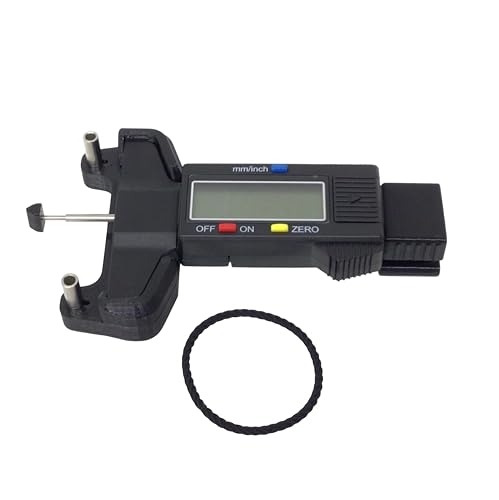 TOP CHOICEBest overallHydra Fitness Exchange Belt Tension Tool Gauge Deflection in Inches &View on Amazon
- 2
 TOP CHOICEBest for home treadmill ownersBIQU Belter Belt Tension Tool Upgrade Tension Check, Belt Tension GaugView on Amazon
- 3
 TOP CHOICEBest for general belt checksBelt Tension Gauge, Auto Belt Tensioner Tool Tightness Gauge, Auto Car Repair ToolView on Amazon
- 4
 Best for force-based readingsBTG-2 95506 Belt Tension Gauge Band Tension Tester Tension Force MeasuView on Amazon
- 5
 Best budget pickContinental 9001 Krikit Tension GaugeView on Amazon
- 6
 Best for specialty useOriginal Tajima Thread Tension Gauge TTG-CM76907 for Embroidery Factory Tools 912500110000View on Amazon
Our Top Picks
Quick Comparison
| Product | Best for | Key feature |
|---|---|---|
| Hydra Fitness Exchange Belt Tension Tool | Treadmill owners who want a direct deflection reading | Dual readout in inches and millimeters with a digital display |
| BIQU Belter Belt Tension Tool | Home users who prefer a sturdy, metal-framed tool | Hollow aluminum alloy frame |
| Belt Tension Gauge, Auto Belt Tensioner Tool | General belt checks on a range of equipment | Simple gauge-style tightness check |
| BTG-2 95506 Belt Tension Gauge | Readings based on tension force | Measures tension force rather than deflection alone |
| Continental 9001 Krikit Tension Gauge | Shoppers who want a basic, low-cost tool | Straightforward mechanical design |
| Original Tajima Thread Tension Gauge | Specialty or non-treadmill tension work | Built for thread tension, not belt deflection |
Hydra Fitness Exchange Belt Tension Tool Gauge Deflection in Inches & MM w Digital Display Works
Hydra Fitness Exchange Belt Tension Tool Gauge Deflection in Inches & MM w Digital Display Works
Best for: Best overall for checking treadmill belt deflection
This is a good fit for treadmill owners who want a clear, numeric reading and do not want to convert units in their head. The display helps when you are comparing a reading before and after an adjustment.
Key specs
- Deflection readout in inches and millimeters
- Digital display
Pros
- Dual units make it easy to match a manufacturer’s specification
- Digital display reduces misreading a small gap
- Designed for measuring deflection on a treadmill-style belt
Cons
- Needs a fresh battery check before use, as digital tools depend on power
- Less useful if you only want a rough, feel-based check
Bottom line: Pick this if you want the most direct, readable measurement and you plan to adjust your belt more than once.
BIQU Belter Belt Tension Tool Upgrade Tension Check, Belt Tension Gauge Meter Tester 2GT Timing Belt Tensiometer
BIQU Belter Belt Tension Tool Upgrade Tension Check, Belt Tension Gauge Meter Tester 2GT Timing Belt Tensiometer for 3D Printers, Hollow Aluminum Alloy Frame Design Improves Reading Accuracy
Best for: Best for home treadmill owners who want a solid frame
Home owners who handle the tool often will appreciate the stiff frame. It suits repeat checks in a garage or spare room.
Key specs
- Hollow aluminum alloy frame
- Designed for 2GT-style timing belts
Pros
- Rigid frame helps keep readings consistent
- Compact enough to store with other tools
- Clear reading scale
Cons
- Built around timing-belt geometry, so treadmill fit takes some judgment
- Requires you to check the manufacturer’s deflection spec for your model
Bottom line: A strong choice for owners who want a durable tool and are comfortable translating the reading to their treadmill’s specification.
Belt Tension Gauge, Auto Belt Tensioner Tool Tightness Gauge, Auto Car Repair Tool
Belt Tension Gauge, Auto Belt Tensioner Tool Tightness Gauge, Auto Car Repair Tool
Best for: Best for general belt checks
This tool is built for automotive drive belts. It can give a rough tightness check, but treadmill belts use a different deflection method, so treat readings as a comparison rather than a spec.
Key specs
- Gauge-style tightness check
Pros
- Simple to read at a glance
- Useful for comparing belts on similar equipment
- Low complexity
Cons
- Not designed specifically for treadmill belt deflection
- Results depend on where and how you press
Bottom line: Better for owners who work on several types of belt-driven equipment and want one general tool.
BTG-2 95506 Belt Tension Gauge Band Tension Tester Tension Force Measuring Measurement Tension Meter
BTG-2 95506 Belt Tension Gauge Band Tension Tester Tension Force Measuring Measurement Tension Meter
Best for: Best for force-based readings
Shoppers who want to think in terms of tension force, not just how far a belt sags, will find this approach useful. It suits people who already understand the manufacturer’s force specification.
Key specs
- Measures tension force
Pros
- Force-based method gives a different view of belt tightness
- Useful for comparing belts across equipment
- Designed as a dedicated measurement tool
Cons
- Treadmill manufacturers often publish deflection figures, so the force value may need conversion
- Less intuitive for first-time adjusters
Bottom line: Choose this if you are comfortable with force measurements and want to match a force spec.
Continental 9001 Krikit Tension Gauge
Continental 9001 Krikit Tension Gauge
Best for: Best budget pick
For owners who only check tension once in a while, a basic mechanical tool keeps things simple. It is a practical option if you do not need a digital readout.
Key specs
- Mechanical gauge design
Pros
- Straightforward design with few parts to fail
- No battery required
- Easy to store
Cons
- Reading takes a little more care than a digital display
- Not specifically marketed for treadmill belts
Bottom line: A sensible choice for occasional adjustments where simplicity matters more than a digital readout.
Original Tajima Thread Tension Gauge TTG-CM76907 for Embroidery Factory Tools 912500110000
Original Tajima Thread Tension Gauge TTG-CM76907 for Embroidery Factory Tools 912500110000
Best for: Best for specialty use
This gauge is made for embroidery thread tension. It is included here because some shoppers search for tension gauges broadly, but it is not a treadmill tool and should be bought only for that purpose.
Key specs
- Designed for thread tension measurement
Pros
- Precise for its intended thread-tension work
- Well-built for industrial sewing environments
- Clear purpose
Cons
- Not suited to treadmill belt deflection
- Limited use for most home fitness owners
Bottom line: Only consider this if your work involves embroidery thread, not treadmill belts.
Buying Guide
Check Whether the Tool Measures Deflection or Force
Most treadmill manuals describe belt tension as deflection: how far the belt can be pressed up at the center of the running surface. Some tools measure force instead. Match the method to your manufacturer’s spec before you buy, because the numbers are not interchangeable.
Good picks for this: Hydra Fitness Exchange Belt Tension Tool, BTG-2 95506 Belt Tension Gauge
Look for a Clear Readout
A digital display or a well-marked scale reduces misreading. Small adjustments often mean a difference of a few millimeters, so a readable scale matters.
Good picks for this: Hydra Fitness Exchange Belt Tension Tool, BIQU Belter Belt Tension Tool
Consider Frame Rigidity
A flexible frame can bend while you press, which skews the reading. Metal frames tend to hold their shape better across repeated checks.
Good picks for this: BIQU Belter Belt Tension Tool, Continental 9001 Krikit Tension Gauge
Match the Tool to Your Treadmill Type
Many gauges are sold for cars, printers or sewing machines. A tool designed for a different belt geometry may give a misleading reading on a flat treadmill belt, so check the listing for the intended use.
Good picks for this: Belt Tension Gauge Auto Belt Tensioner Tool, Hydra Fitness Exchange Belt Tension Tool
Think About Frequency of Use
If you adjust your belt once a year, a simple mechanical tool may be enough. If you check it often, a digital tool with a steady frame saves time and reduces guesswork.
Good picks for this: Continental 9001 Krikit Tension Gauge, Hydra Fitness Exchange Belt Tension Tool
Plan for Storage and Durability
Small measuring tools get lost or dropped. Look for a compact body and a sturdy build. Keep the tool out of damp areas, especially if it has electronics.
Good picks for this: BIQU Belter Belt Tension Tool, BTG-2 95506 Belt Tension Gauge
Confirm Your Manufacturer’s Specification First
No gauge can tell you the right tension on its own. Check your treadmill’s manual or the manufacturer’s support pages for the correct deflection or force value, and only then decide whether a tool can give you that number.
Good picks for this: Hydra Fitness Exchange Belt Tension Tool, Continental 9001 Krikit Tension Gauge
FAQ
What is a treadmill belt tension gauge used for?
It measures how tight the belt is, usually by how far the center can be pressed up. Owners use the reading to compare against the manufacturer’s specification before making small adjustments to the rear roller bolts.
Can I use a car belt tension gauge on a treadmill?
Sometimes it gives a rough idea, but car tools are built for different belt types and measuring points. For a reliable adjustment, use a tool that matches your treadmill’s deflection method and check the manufacturer’s figure.
How often should I check treadmill belt tension?
Many owners check it when the belt starts to slip, drift to one side, or after moving the treadmill. Your manual may suggest a schedule. If you are unsure, ask a qualified technician.
Is a digital gauge better than a mechanical one?
A digital display makes small differences easier to read, but a well-built mechanical tool can be just as accurate when used carefully. The best choice depends on how often you adjust and how comfortable you are reading scales.
What tension should a treadmill belt have?
The correct value depends on the model. Look in the owner’s manual or on the manufacturer’s support site for the deflection or force specification, and do not rely on a general rule.
Should I adjust tension myself or call a technician?
Basic checks are within reach for most owners, but if the belt is badly off-center, the motor is involved, or you are unsure, consult a qualified treadmill technician. Improper adjustment can damage the belt or motor.
Conclusion
For most treadmill owners, the Hydra Fitness Exchange Belt Tension Tool is the most direct choice because its dual-unit digital display makes deflection readings easy to match against a manufacturer’s spec. The BIQU Belter Belt Tension Tool suits owners who want a rigid frame for repeated checks. The Continental 9001 Krikit Tension Gauge is a practical pick for occasional use, while the BTG-2 95506 fits people who think in terms of force. The automotive and thread-tension tools are better suited to other jobs. Whichever you choose, confirm your treadmill’s specification first and consult a qualified technician when in doubt.
Sources
- Consumer safety guidance on home exercise equipment use and maintenance (cpsc.gov)
- General workplace guidance on machine guarding and equipment inspection (osha.gov)
- Standards and measurement reference information for accurate length and force measurement (nist.gov)
Related reading
- Why Does a Treadmill Belt Slip? Tension vs Drive Belt Causes Compared
- Why Does My Treadmill Belt Slip When I Run? Tension Vs. Wear Compared
- Treadmill Belt Getting Hot: Lubricant vs Belt Tension Fix (2026)
- Treadmill Belt Care: Tension, Tracking and Wear
- ProForm Treadmill Adjust Belt: Step-by-Step Centering and Tension Guide
About Emily Parker
Emily Parker is part of our editorial team and reviews and edits our treadmills & walking pads guides, checking product details against manufacturer specifications and owner feedback.