 By Emily Parker
Updated November 2026
Shoppers searching for a treadmill with long belt space usually have a specific problem in mind: a stride that feels cramped on a standard deck, a height that makes short belts uncomfortable, or a plan to run rather than walk. This list focuses on models that list a running surface longer than the typical home unit, along with the other factors that matter in daily use: deck width, motor strength, weight capacity, incline range, and folding footprint. Each pick is judged on manufacturer-listed specifications and the patterns owners commonly describe, not on any testing we carried out ourselves.
Our top picks at a glance
- 1
 TOP CHOICEBest overallTreadmill for Home with 0-15% Auto Incline, Foldable Walking Pad TreadView on Amazon
- 2
 TOP CHOICEBest for long-stride runners4.0HP & 9.5MPH Treadmill with 42.5"x16.1" Running Belt, 55"x18" Extra-View on Amazon
- 3
 TOP CHOICEBest for small roomsWalking Pad Treadmills for Home with 7.5MPH, Built-in Speaker, UpgradeView on Amazon
- 4
 Best for heavy-duty useCommercial Treadmill for Home and Commercial Gym, Foldable, 3.0 HP DouView on Amazon
- 5
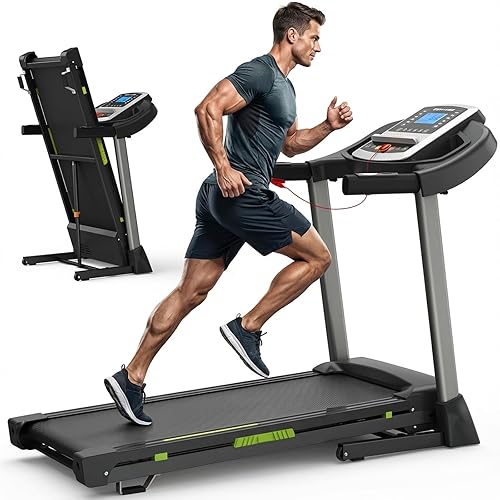 Best for varied workoutsFoldable Treadmill for Home with 0.5–7.5 MPH, Large Running Surface,12View on Amazon
- 6
 Best budget pick12% Incline Home Treadmill, 3.5HP, Foldable Walking Pad with Handles,View on Amazon
Our Top Picks
Quick Comparison
| Product | Best for | Key feature |
|---|---|---|
| Treadmill for Home with 0-15% Auto Incline, Foldable Walking Pad | Overall balance of incline and capacity | 0-15% auto incline with 330 lb capacity |
| 4.0HP & 9.5MPH Treadmill with 42.5″x16.1″ Running Belt | Long-stride runners | 42.5-inch running belt length |
| Walking Pad Treadmills for Home with 7.5MPH | Small rooms | Compact foldable frame with app support |
| Commercial Treadmill for Home and Commercial Gym | Heavy-duty use | 3.0 HP double motor drive |
| Foldable Treadmill for Home with 0.5–7.5 MPH | Varied workouts | 12 programs and heart rate monitor |
| 12% Incline Home Treadmill, 3.5HP, Foldable Walking Pad | Budget-conscious buyers | 12% incline with 320 lb capacity |
Treadmill for Home with 0-15% Auto Incline, Foldable Walking Pad Treadmill with 330LBS Weight Capacity and Pulse Sensors, 3.0HP Quiet Walking Pad with App and LCD Display
Treadmill for Home with 0-15% Auto Incline, Foldable Walking Pad Treadmill with 330LBS Weight Capacity and Pulse Sensors, 3.0HP Quiet Walking Pad with App and LCD Display
Best for: Overall balance of incline and capacity
This model suits people who want incline work and a sturdy frame without moving to a full-size commercial unit. Its automatic incline range makes it a practical choice for hill-style walking.
Key specs
- 3.0HP motor, per the listing
- 0-15% automatic incline
- 330 lb weight capacity
- Foldable walking pad design with LCD display
Pros
- Wide incline range for varied workouts
- High listed weight capacity
- Pulse sensors and app connectivity
Cons
- Walking pad frames offer less running stability than full decks
- Incline motor adds noise owners sometimes mention
Bottom line: A strong all-round choice for walkers who want incline without a large footprint.
4.0HP & 9.5MPH Treadmill with 42.5″x16.1″ Running Belt, 55″x18″ Extra-Wide Deck, and Adjustable Handle Height
4.0HP & 9.5MPH Treadmill with 42.5"x16.1" Running Belt, 55"x18" Extra-Wide Deck, and Adjustable Handle Height UMAY Fitness Home Running Treadmill with 20% Auto Incline
Best for: Long-stride runners
Runners with longer strides or taller frames often find standard belts restrictive. The 42.5-inch running belt and extra-wide deck give more room for a natural stride.
Key specs
- 4.0HP motor, per the listing
- 9.5 MPH top speed
- 42.5″ x 16.1″ running belt
- 55″ x 18″ deck with 20% auto incline
Pros
- Long running belt suits longer strides
- Extra-wide deck adds lateral room
- Higher top speed for serious runners
Cons
- Larger footprint than walking pads
- Heavier to move when folded for storage
Bottom line: Best suited to runners who need belt length above the typical home range.
Walking Pad Treadmills for Home with 7.5MPH, Built-in Speaker, Upgrade 3.0HP Foldable Treadmills with 10% Incline, Compact Running Machine with APP, 350 LBS, LED Display, Remote Control
Walking Pad Treadmills for Home with 7.5MPH, Built-in Speaker, Upgrade 3.0HP Foldable Treadmills with 10% Incline, Compact Running Machine with APP, 350 LBS, LED Display, Remote Control
Best for: Small rooms
Apartment dwellers and anyone with limited floor space will appreciate the compact footprint. The remote control and app support make it easy to use in a shared living area.
Key specs
- 3.0HP motor, per the listing
- 7.5 MPH top speed
- 10% incline
- 350 lb capacity, built-in speaker, LED display
Pros
- Compact foldable design
- Remote control and app support
- Built-in speaker for entertainment
Cons
- Lower top speed than performance models
- Belt length is modest for full running strides
Bottom line: Ideal for walkers and light joggers working in a small space.
Commercial Treadmill for Home and Commercial Gym, Foldable, 3.0 HP Double Motor Drive, 15% Incline, 18 km/h Top Speed
Commercial Treadmill for Home and Commercial Gym, Foldable, 3.0 HP Double Motor Drive, 15% Incline, 18 km/h Top Speed
Best for: Heavy-duty use
Households with several users or frequent high-intensity sessions may want a frame built for sustained load. The double motor drive is aimed at steadier performance under repeated use.
Key specs
- 3.0 HP double motor drive, per the listing
- 15% incline
- 18 km/h top speed
- Foldable frame
Pros
- Double motor drive suited to heavier use
- 15% incline range
- Foldable despite the commercial-style build
Cons
- Heavier and harder to move than standard home units
- Belt dimensions should be verified against your space
Bottom line: A good fit for multi-user households and dedicated home gyms.
Foldable Treadmill for Home with 0.5–7.5 MPH, Large Running Surface, 12 Programs, Heart Rate Monitor, Heavy-Duty Folding Treadmill 350 LBS Capacity
Foldable Treadmill for Home with 0.5–7.5 MPH, Large Running Surface,12 Programs, Heart Rate Monitor, Heavy-Duty Folding Treadmill 350 LBS Capacity
Best for: Varied workouts
Users who alternate between slow walking, brisk walking and light jogging benefit from a wide speed range and preset programs. The large running surface adds comfort for longer sessions.
Key specs
- Speed range 0.5–7.5 MPH, per the listing
- 12 preset programs
- Heart rate monitor
- 350 lb capacity
Pros
- Wide speed range for all fitness levels
- Twelve programs for structured training
- Heart rate monitor included
Cons
- Top speed is lower than performance-focused models
- Program variety depends on owner preference
Bottom line: Good for mixed-intensity routines and beginners building up.
12% Incline Home Treadmill, 3.5HP, Foldable Walking Pad with Handles, 320LBS Capacity, Portable, Low Noise, Home/Office/Gym ANCHEER 12% Incline Walking Pad, Treadmills for Home, Handle Bar, Foldable
12% Incline Home Treadmill, 3.5HP, Foldable Walking Pad with Handles, 320LBS Capacity, Portable, Low Noise, Home/Office/Gym ANCHEER 12% Incline Walking Pad, Treadmills for Home, Handle Bar, Foldable
Best for: Budget-conscious buyers
Shoppers who want incline and a foldable frame without stepping into premium pricing will find this a practical option. Its handlebar and portable design suit home offices as well.
Key specs
- 3.5HP motor, per the listing
- 12% incline
- 320 lb capacity
- Foldable with handlebar
Pros
- Useful incline for the category
- Portable and foldable
- Handlebar adds stability for walkers
Cons
- Walking pad belt length limits running comfort
- Lower incline range than the top overall pick
Bottom line: A sensible choice for walkers who want incline on a tighter budget.
Buying Guide
Belt Length and Width
Belt length is the single most important factor when you want a treadmill with long belt space. Many home units use running surfaces in the 40 to 50 inch range, but manufacturers vary. Measure your stride or compare your height against the listed belt dimensions. Width matters for comfort too, since a narrow belt can feel restrictive during side steps or wider gait. Check both length and width in the specification table, not just the marketing headline.
Good picks for this: 4.0HP & 9.5MPH Treadmill, Commercial Treadmill for Home and Commercial Gym
Motor Power and Duty Rating
Continuous horsepower is more useful than peak figures. Owners running at higher speeds or on inclines generally report better results from motors rated for sustained load. A 3.0 HP or higher rating is common among models built for regular running. Walking-focused units can get by with lower ratings, though heavier users should look for higher weight capacity alongside motor specs.
Good picks for this: Treadmill for Home with 0-15% Auto Incline, Commercial Treadmill for Home and Commercial Gym
Deck Cushioning and Surface
Cushioning affects joint comfort, especially on longer belts used for running. Look for descriptions of shock-absorbing decks or multi-layer cushioning. Owners often note that a firm but supportive deck helps reduce fatigue on longer sessions. Remember that a longer belt can flex more if the frame is light, so cushioning and frame rigidity should be considered together.
Good picks for this: 4.0HP & 9.5MPH Treadmill, Foldable Treadmill for Home with 0.5–7.5 MPH
Incline Range
Incline adds intensity without increasing speed. Models with 10 to 15 percent inclines give more training variety than flat-only designs. Auto incline, where the machine adjusts itself during a program, is convenient but adds mechanical complexity. Consider how often you plan to use incline before paying attention to the maximum figure.
Good picks for this: Treadmill for Home with 0-15% Auto Incline, 12% Incline Home Treadmill
Folding Mechanism and Footprint
Folding frames save floor space, but a long belt makes folding more demanding. Check the folded depth and height against your storage area. Manufacturers typically list folded dimensions separately from running dimensions. Heavier frames can be harder to lower and raise safely, so consider whether one person can fold and move the unit comfortably.
Good picks for this: Walking Pad Treadmills for Home with 7.5MPH, 12% Incline Home Treadmill
Weight Capacity and Durability
Weight capacity ratings reflect the maximum load the frame and deck are designed to support. Choose a capacity that comfortably exceeds your body weight, since a unit operating near its limit may wear faster. Owners report that frame stability and belt tracking are often the first signs of strain, so look for steel frames and solid construction details in the listing.
Good picks for this: Foldable Treadmill for Home with 0.5–7.5 MPH, Walking Pad Treadmills for Home with 7.5MPH
Care and Maintenance
Long belts need regular attention to stay aligned. Check tension and tracking periodically, and keep the deck clean and lubricated as the manufacturer specifies. A misaligned belt can drift toward one side and cause uneven wear. Follow the owner’s manual for lubrication intervals, and consult a qualified technician if you notice persistent slipping or grinding.
Good picks for this: 4.0HP & 9.5MPH Treadmill, Commercial Treadmill for Home and Commercial Gym
FAQ
What belt length counts as long for a treadmill?
There is no universal standard, but many home treadmills use running surfaces around 40 to 50 inches. Surfaces above that range are generally considered long. Compare the listed belt dimensions directly rather than relying on the model name.
Is a longer belt better for walking?
Not necessarily. Walkers with average strides often do well on standard belts. A longer belt helps most when you run with a long stride or are taller than average.
Do longer belts need more maintenance?
Longer belts can drift out of alignment more easily, so periodic tension and tracking checks are worthwhile. Follow the manufacturer’s maintenance schedule.
Can a walking pad handle running?
Walking pads are generally designed for walking and light jogging. For regular running, a full deck with a longer belt and higher motor rating is usually a better match.
How much space do long-belt treadmills need?
Plan for both running and folded dimensions. Measure the overall length, add clearance at the front and back, and confirm the folded footprint fits your storage area.
Should I check weight capacity before buying?
Yes. Choose a capacity that comfortably exceeds your body weight. Operating near the upper limit may increase wear over time.
When should I consult a professional?
If you notice persistent belt slipping, grinding, or frame wobble, consult a qualified treadmill technician. If you have a health condition, speak with a doctor before starting a new exercise routine.
Conclusion
For most buyers searching for a treadmill with long belt space, the right pick depends on how you train. Runners with longer strides should look first at the 42.5-inch running belt model, while those in small rooms may prefer a compact walking pad with app support. Heavier users and multi-person households may find the commercial-style double motor drive more suitable, and budget-minded walkers can consider the 12% incline model. Measure your space and stride, compare the listed belt dimensions, and choose the option that matches your routine.
Sources
- Consumer safety guidance on home exercise equipment, including setup and use precautions (cpsc.gov)
- Exercise guidelines and recommendations for safe, progressive training (acsm.org)
- Health information on physical activity and joint considerations for exercisers (nih.gov)
Related reading
- Treadmill Running Decks: Belt, Deck and Care
- Treadmill Cleaning: Console, Belt and Motor Area
- Treadmill Belt Care: Tension, Tracking and Wear
- Woodway Split Belt Treadmill: 5 Best Options Compared (2026)
- Why Isn't My Treadmill Belt Moving? 6 Causes and Fixes
- Why Does a Treadmill Belt Slip? Tension vs Drive Belt Causes Compared
- Why Does My Treadmill Belt Slip When I Run? Tension Vs. Wear Compared
About Emily Parker
Emily Parker is part of our editorial team and reviews and edits our treadmills & walking pads guides, checking product details against manufacturer specifications and owner feedback.