By Emily Parker
Updated November 2026
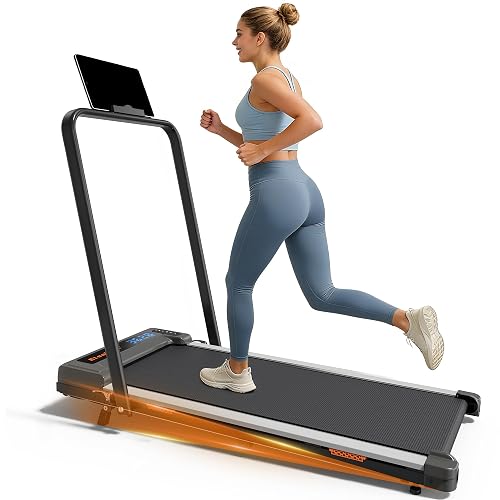
A walking pad handle bar attachment gives you something to hold while you walk, which helps with balance, posture and confidence on a compact belt. This guide explains how to confirm the attachment fits your model, install it correctly, and check that it is stable before you use it. Most of the work comes down to matching the mounting style and tightening everything properly.
Check Compatibility Before You Buy or Install
Not every handlebar fits every walking pad. Manufacturers usually specify which models their attachments support, so start there. Look at the frame design first, since handlebars mount in different ways depending on whether the pad has a fixed upright, a foldable frame or a console that already has mounting points.
Shopping for one? See our guide: 4 Best Walking Pads with Handle for Home Use (2026).
- Confirm the model name and revision number on the attachment listing or packaging.
- Measure the width and height of your pad’s rear or side frame where the bar will clamp.
- Check whether the pad has existing bolt holes, or whether the bar relies on clamps.
- Look at the weight rating and make sure it is well above your body weight plus a margin for leaning.
Install the Handlebar Step by Step
Installation usually takes less than 30 minutes with basic hand tools. Work on a flat floor, with the walking pad unplugged and the safety key removed, so the belt cannot move while you work.
- Unplug the power cord and remove the safety key.
- Lay out all hardware and compare it against the parts list in the manual.
- Position the bar base on the frame at the mounting point, keeping it level and centered.
- Insert bolts or clamps and hand-tighten first to keep everything aligned.
- Tighten evenly in small increments, alternating between fasteners, until the bar is firm.
- Check that the bar does not rotate or wobble when you push it from different angles.
Test the Attachment Without Walking
Before you step onto the belt, lean your full weight on the handlebar and hold it for several seconds. Shake it gently side to side and forward. Any movement at the base means you need to retighten or reposition the mounts.
Set Up Your Walking Position
A handlebar only helps if it sits at a comfortable height. Stand on the belt with the pad off and grip the bar. Your elbows should bend slightly, and your shoulders should stay relaxed rather than hunched. If you have to reach forward or lift your arms, the bar is too high or too far out. Some owners find that gripping lightly, with the handle used for balance rather than support, keeps their stride more natural.
Common Mistakes
- Tightening one bolt fully before the others, which can bend the mount out of square.
- Skipping the weight-bearing test and assuming the bar is secure.
- Gripping hard and leaning forward, which shifts your center of gravity and can cause stumbles.
- Reinstalling after folding the pad without rechecking the bolts, since folding can loosen fasteners over time.
- Using a bar on a model it was not designed for, even if the holes look similar.
Recommended Gear
- Adjustable wrench set: Useful for tightening mounting hardware evenly without stripping the bolts. View on Amazon
- Hex key set: Many attachments use hex fasteners, so a full set covers most installs. View on Amazon
FAQ
Can I add a handlebar to any walking pad?
No. Compatibility depends on the frame design and mounting points, so check the manufacturer’s list of supported models before buying.
How often should I check the bolts?
Check them after the first few uses, then every few weeks, and always after folding or moving the pad.
Is a handlebar safe for walking at higher speeds?
A handlebar is meant for balance and stability at normal walking speeds. If you have a health condition or balance concern, consult a doctor or physical therapist before changing how you use the machine.
Conclusion
A walking pad handle bar attachment works best when it matches your model, is installed evenly and passes a weight test before use. Take time with the setup and check the fasteners regularly. Once the bar is secure and at the right height, you can focus on your walking routine.
Related reading
- Will a Walking Pad Help Me Lose Weight? What to Expect and How to Use One
- Walkingpad Foldable Walking Pad: Is It Right for Your Home?
- Walking Pads Explained: Uses, Limits and Safety
Ready to choose one?
About Emily Parker
Emily Parker is part of our editorial team and reviews and edits our treadmills & walking pads guides, checking product details against manufacturer specifications and owner feedback.